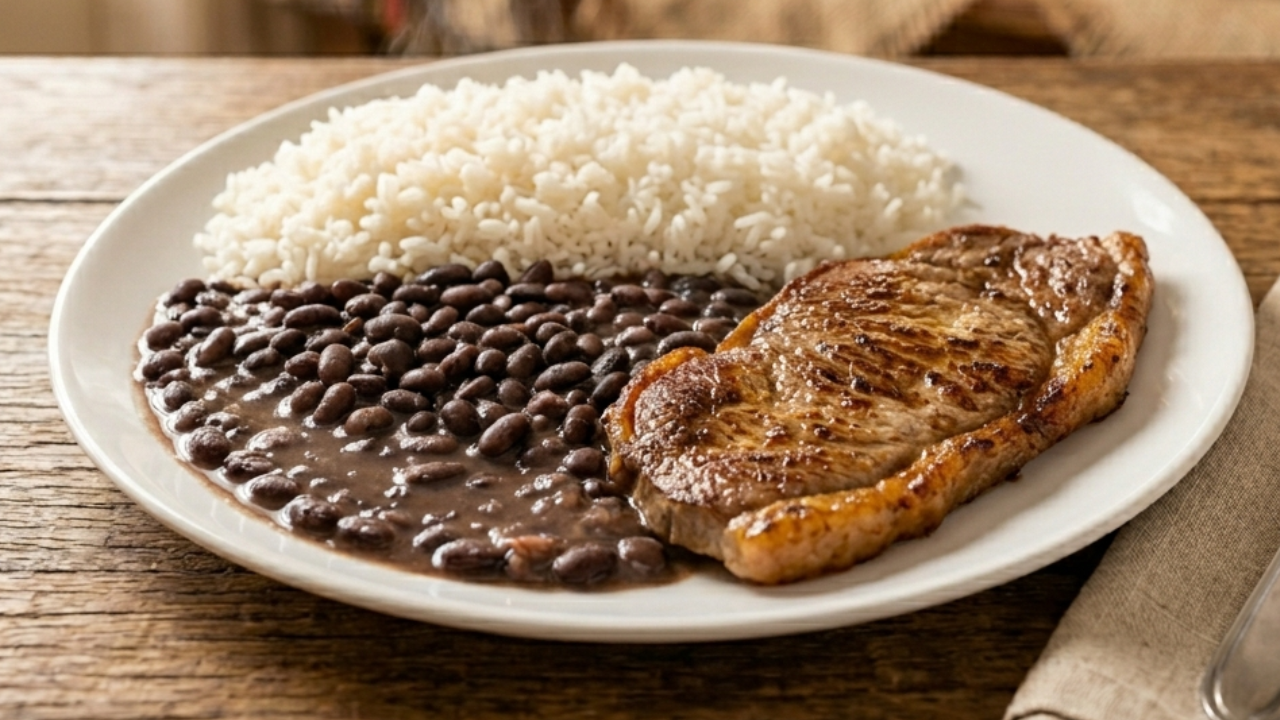
Rice, beans & steak
The holy trinity of the Brazilian table.
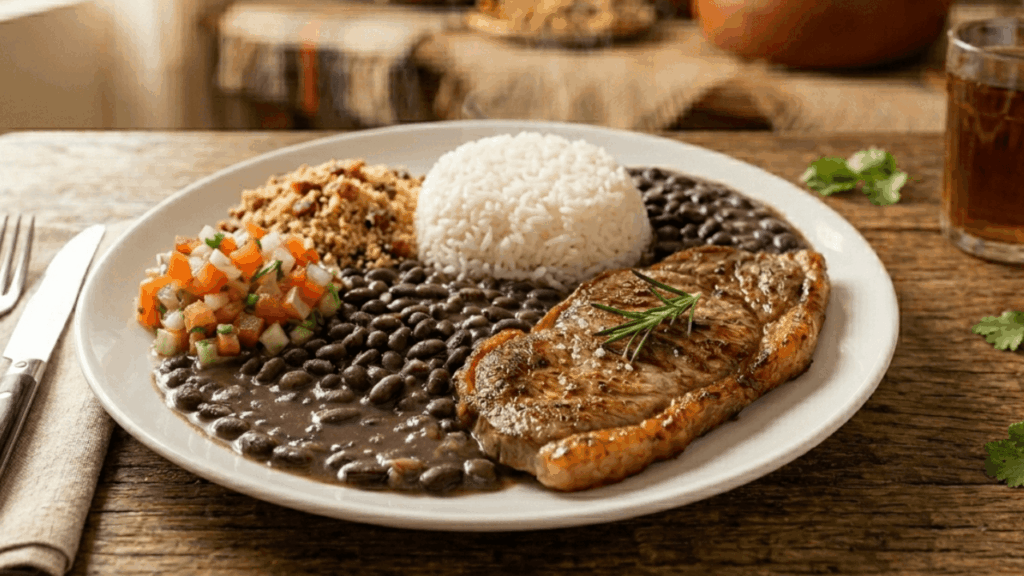
There’s a very specific moment in every Brazilian’s life. You open the front door on a Monday at noon and catch that smell. Garlic sizzling in hot oil, beans slowly bubbling on the stove, and the hiss of a steak hitting the pan. You don’t even need to see the plate. Your stomach already knows what’s coming.
Rice and beans isn’t just a meal. It’s a ritual. Monday through Friday, without fail, it shows up on millions of tables across the country — from the Amazon to the southern highlands, from farmhouses to city apartments. Husbands, kids, grandparents — everyone lights up when they come home and find this plate waiting. Simple as that.
“A good Brazilian wouldn’t swap rice and beans for any dish in the world. And anyone who’s had it made from scratch at home knows exactly why.”
Where did this combination come from?
The story of rice and beans in Brazil runs deep. Beans were already being grown by indigenous peoples long before Portuguese colonizers arrived — used as food, medicine, and currency. Rice came with the settlers and adapted so well to the Brazilian soil that it’s now impossible to imagine the country without it.
But it was in the colonial kitchens — and through the African culinary traditions brought by enslaved people — that the two truly came together. African cooking introduced the technique of the refogado: garlic, onion, and hot fat, turning humble ingredients into something deeply flavorful. From that moment on, the duo conquered the whole country.
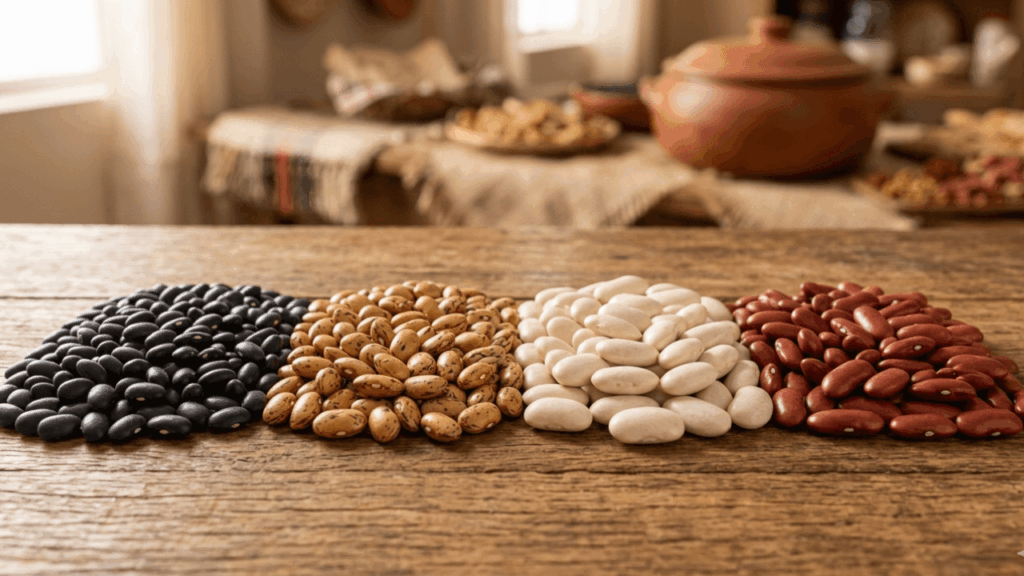
Over time, each region developed its own version. In Rio de Janeiro and São Paulo, black beans became the favorite — rich, dark, with a thick broth that stains the rice in the best possible way. In the countryside and the Northeast, the carioca bean reigns, softer and golden. In other corners, white or red beans show up to prove that this tradition has many faces — but the same heart.
Fluffy Rice
The Brazilian way — garlic-toasted, fluffy, and never sticky.
2 cups long-grain white rice (agulhinha)
4 cups water
1 garlic clove, minced
1 tablespoons vegetable oil or olive oil
1 teaspoons salt
Instructions
- Rinse the rice: Rinse 2 cups of rice under cold running water until the water runs clear. This removes excess starch and is the secret to fluffy, separate grains.
- Toast the garlic: Heat 1 tablespoon of oil in a medium saucepan over medium heat. Add the minced garlic and sauté for about 30 seconds until golden and fragrant — don’t let it burn.
- Toast the rice: Add the rinsed rice to the pan and stir well, coating every grain with the garlic oil. Toast for 1–2 minutes until the rice looks slightly translucent.
- Add water and salt: Carefully pour in 4 cups of boiling water (it must be boiling — this is key). Add 1 teaspoon of salt and stir once to combine.
- Cook covered: Bring to a boil, then reduce heat to low. Cover with a lid and cook undisturbed for 15 minutes or until dry.
- Rest and fluff: Turn off the heat and let the rice rest, still covered, for 5 minutes. Then fluff gently with a fork and serve.
How to cook the beans
Ingredients
- 1 cup dry beans, soaked overnight
- 4 cups water
- ½ teaspoon salt
- 1 tablespoon oil
- 2 garlic cloves, crushed
- ½ medium onion, finely chopped (50g)
Instructions
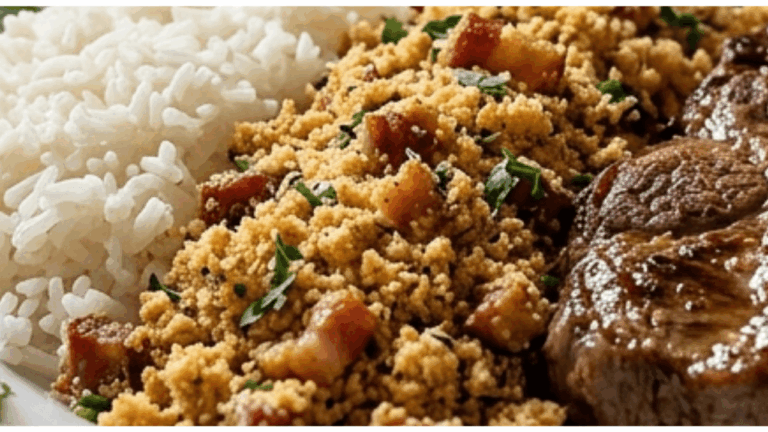
You may also like: Bacon Farofa.
- Cook the beans: In a medium pressure cooker, add the soaked beans and water. Cook on low heat for 15 minutes after it reaches full pressure.
- Make the base: In a separate medium saucepan, fry the onion until golden, then add the garlic and sauté for 2 minutes.
- Finish the beans: Add the cooked beans with a ladle, including some broth, and mash a few beans with the back of a spoon. Stir to combine and cook with the lid slightly open for 10 minutes, or until the broth thickens slightly. Remove from heat and serve immediately alongside the rice.
Now it’s time to complete the trio — head over to our next recipe and learn how to make the perfect Brazilian steak: golden on the outside, juicy on the inside.
→ Click here to learn how to make the perfect steak.
Difficulty: Easy
Prep Time: Medium (40 to 50 minutes)
Servings: 4 portions
Category: Vegetarian
Calories: Approximately 60 to 80 calories per 100g serving
2 Comments
Comments are closed.