
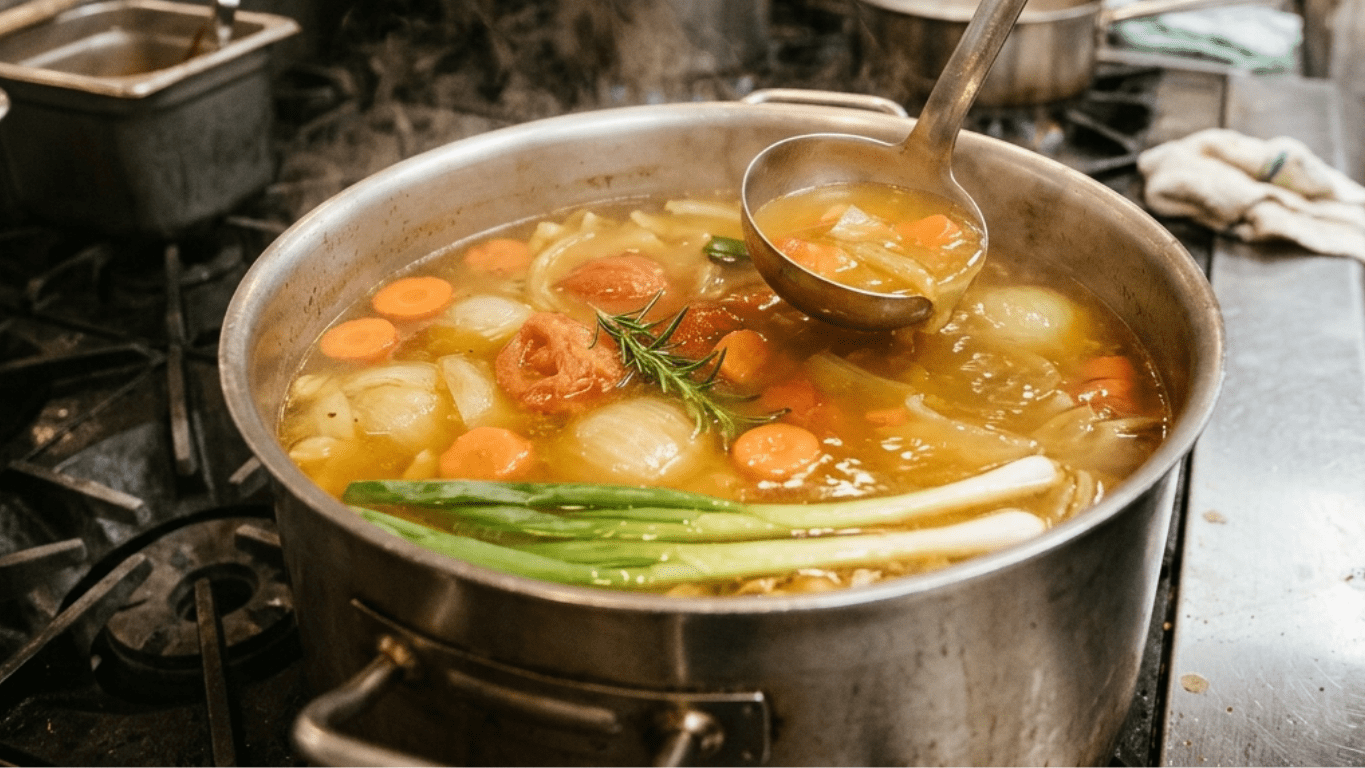
Vegetable Stock
The secret to true cooking lies in simplicity and respect for ingredients.
Far from artificial seasonings and ultra-processed powders, authentic homemade vegetable stock is the silent foundation that transforms ordinary dishes into unforgettable experiences.
Made simply with fresh vegetables and aromatic herbs simmered slowly, it brings the depth of flavor and warmth that only real food can deliver.
Ingredients
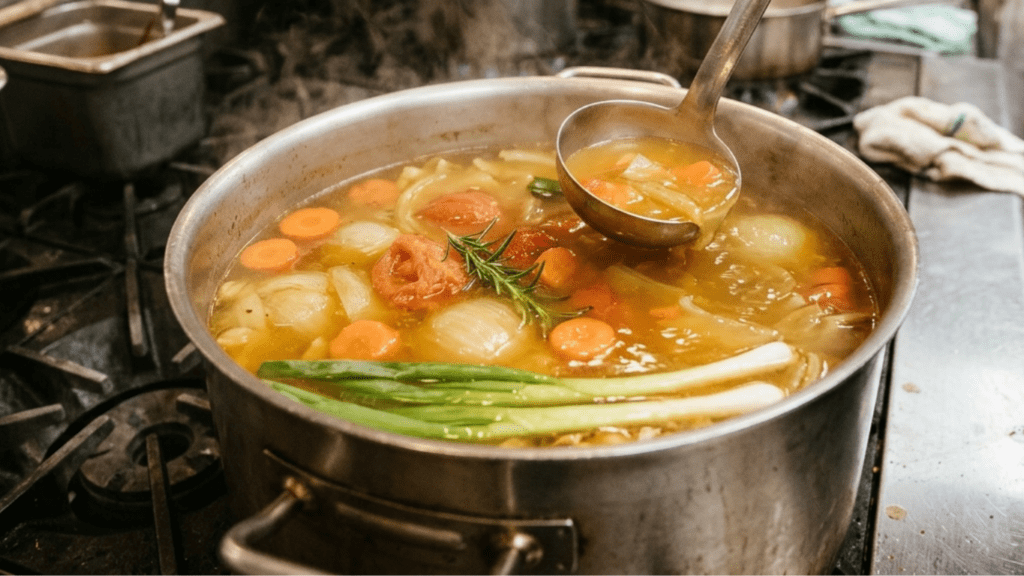
- 1/2 carrot, sliced into medium rounds
- 1/2 onion, halved or quartered
- 1/2 tomato, deseeded (optional, for a clearer broth)
- Rosemary, one small sprig
- Scallions (green onions), kept whole (use the white parts for the base and the green parts for finishing)
- Salt, to taste
- Water, approximately 500ml to 700ml
Instructions
- Sauté (Optional): For a deeper, slightly sweeter flavor, lightly sauté the onion and carrot in a pan with a drop of olive oil until lightly browned.
- Simmer: Add the water, tomato, rosemary sprig, and the white parts of the scallions to the pan.
- Slow Cook: Bring to a boil, then reduce to low heat. Simmer gently for 20 to 30 minutes with the lid slightly ajar. This process allows the water to absorb the essential oils from the rosemary and the natural sweetness of the vegetables.
- Finish: Add the salt at the end to adjust to your preference. Add the green parts of the scallions during the final 2 minutes of cooking to preserve their freshness.
- Strain: Strain the broth through a fine-mesh sieve. You may discard the solids or use them in purées.
Read aldo : Beef shank with polenta.
Pro-Tips
- Flavor Control: Rosemary is quite potent; if you prefer a milder taste, remove the sprig immediately after the cooking time so it does not overpower the other flavors.
- Storage: This stock can be frozen in ice cube trays. These “natural flavor cubes” are perfect for adding depth to risottos, stews, or for finishing dishes quickly without the need for artificial seasonings.