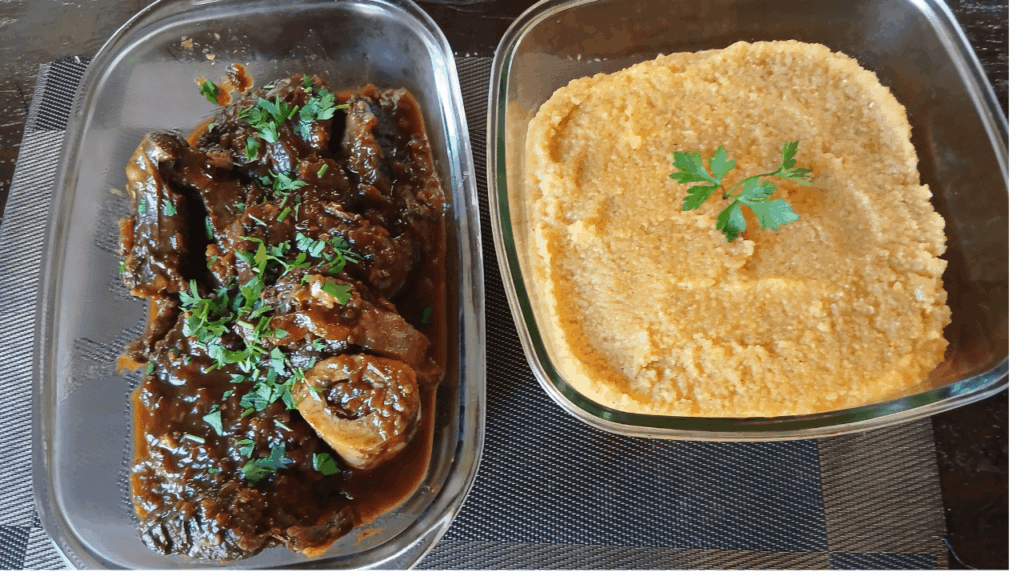
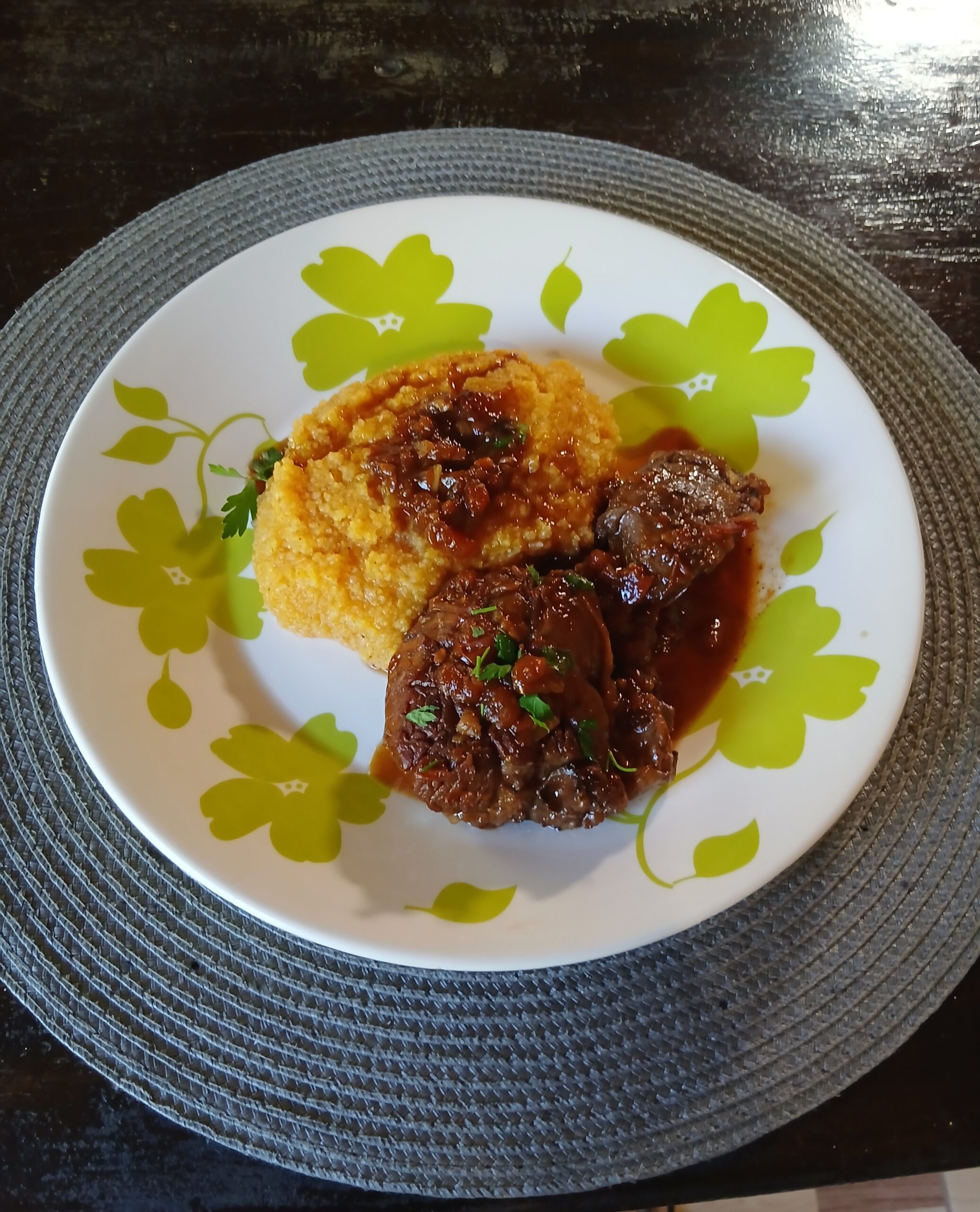
Beef shank with polenta
The recipe features a meat and gravy dish served over polenta, which is actually a traditional Romanian recipe. Many Italian immigrants adopted this filling, hearty combination.
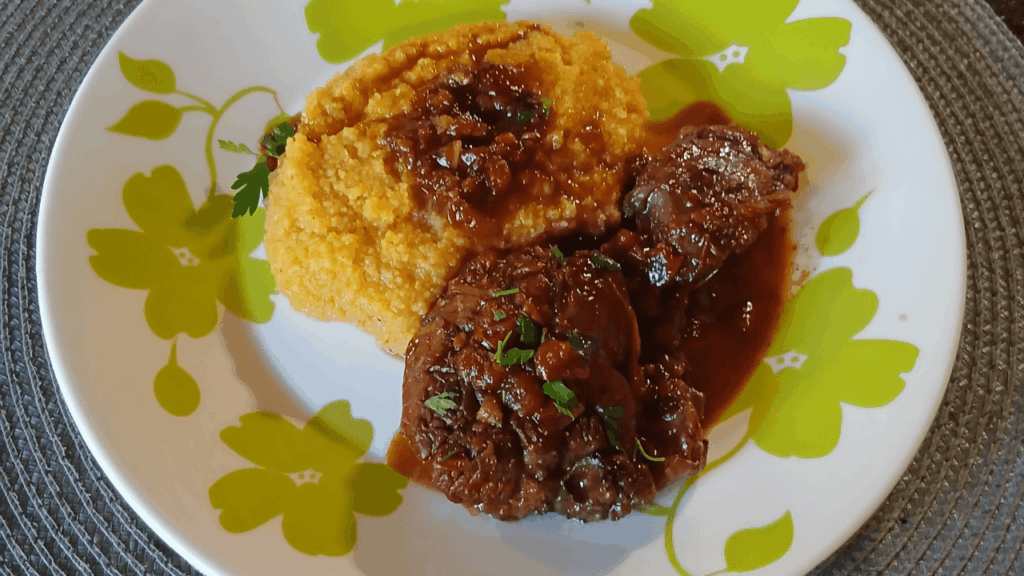
Beef shank with polenta.
Back in colonial Brazil, corn was abundant—much more common than the wheat used for pizza or other ingredients from their homeland.
Because of this, polenta moved beyond Italian colonies to win over the entire country. Today, you’d pay a premium for a dish like this in a traditional Italian restaurant.
We chose beef shank because it’s rich in collagen and low in fat, making it a potentially fit-friendly meal depending on how it’s prepared. The polenta we’re using is a coarser grind, which looks a bit like meal, because fine cornflour is harder to work with and doesn’t hold its shape as well.
Sauce Ingredients
- 1 lb beef shank medallions, trimmed
- 4 tablespoons lard or vegetable oil
- ½ cup dry red wine
- 1 onion, chopped
- 3 garlic cloves
- 1 ripe tomato, chopped
- 3 tablespoons Worcestershire sauce
- Salt, black pepper, and fresh herbs to taste
- 3 cups water.
Polenta Ingredients
- 5 cups water
- 1½ cups coarse cornmeal
- 2 teaspoons salt
- 1 level teaspoon smoked paprika
- 1 level teaspoon sweet paprika
- Ground black pepper to taste
- 1 tablespoon olive oil or lard
Note: 1 cup in this recipe = 200 ml (6.8 fl oz).
Direction:
First, trim the beef shank. By “trim,” we mean cutting off the excess fat — the yellowish parts — as well as the membrane surrounding each medallion, so the meat doesn’t shrink or lose its shape while cooking.
As they say in fine dining: “The difference between a cheap cut and an expensive one is all in the preparation.” The price at the butcher shop is the same for everyone. But when you see what a well-prepared dish costs compared to a poorly made one, the difference is remarkable.
Without seasoning yet, sear the medallions one by one in a pressure cooker with a little olive oil or lard over medium heat. Brown both sides. Do this with all the medallions — you’ll get a nice golden crust, just don’t let them burn.
Once all the medallions are seared, add them back to the pot along with the chopped onion and garlic. Cook until the garlic is fragrant. Then add the chopped tomato, Worcestershire sauce, wine (optional), and water.
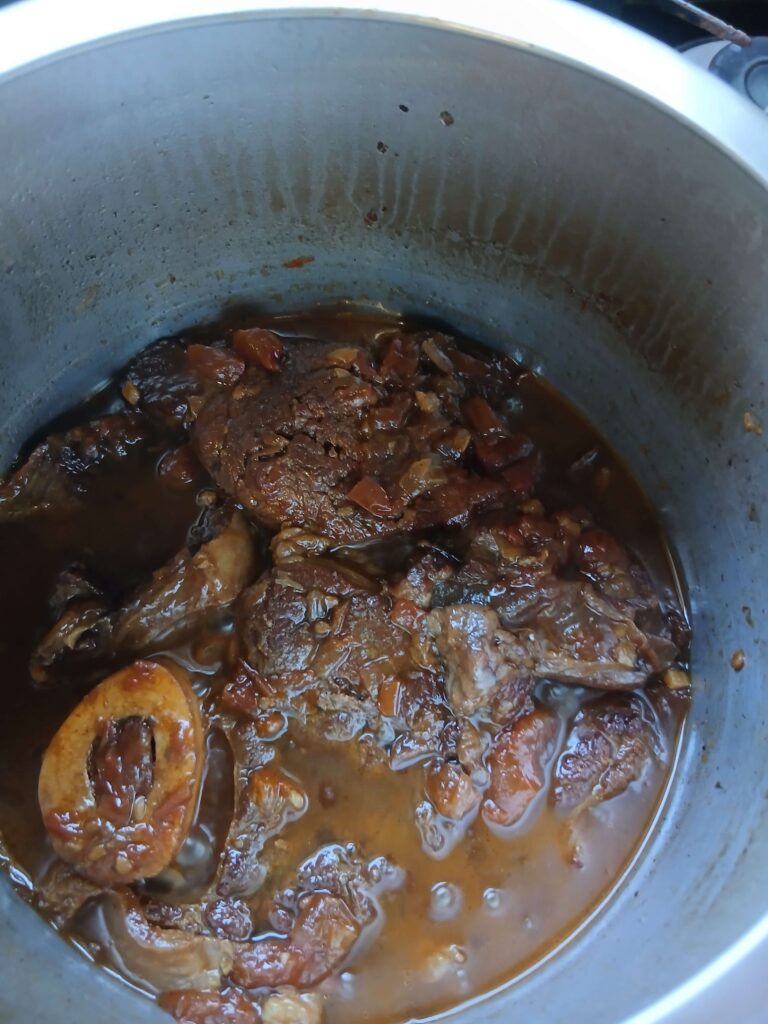
Lock the lid on the pressure cooker and cook for 25 minutes over medium-low heat.
After 25 minutes, turn off the heat and release all the pressure through the valve.
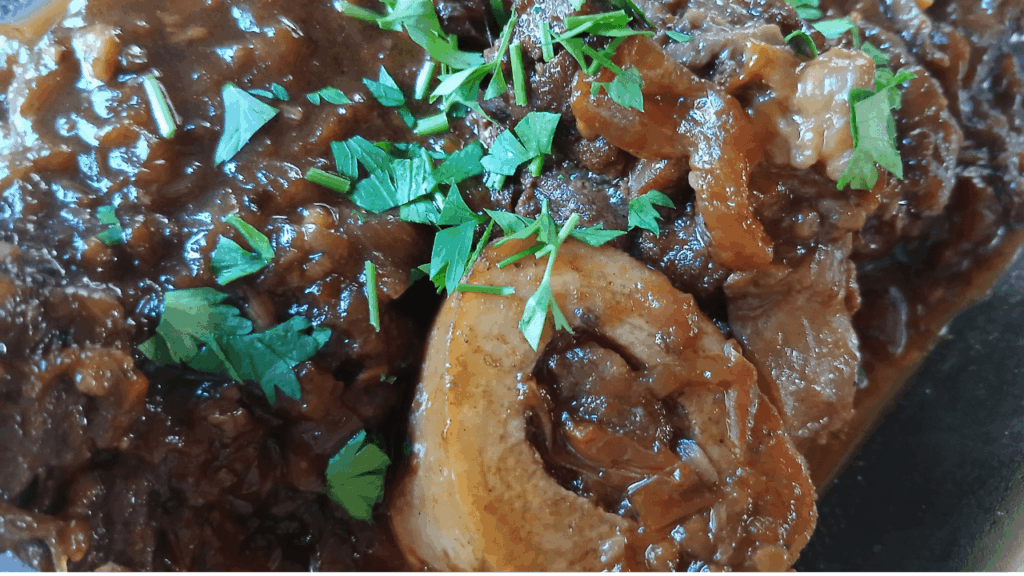
Open the lid and check the meat. If needed, let it cook uncovered for another 10 minutes, until the meat is fall-off-the-bone tender. The sauce should be thick and reduced. Leaving the lid off helps the sauce reduce better.
The polenta
Now that the meat is in the pressure cooker, let’s make the polenta. Grab a heavy-bottomed pot. Sauté a garlic clove in olive oil, then add the water, cornmeal, and seasonings.
IIn this recipe, we use coarse salt ground in a blender — learn how to make a healthier salt option.
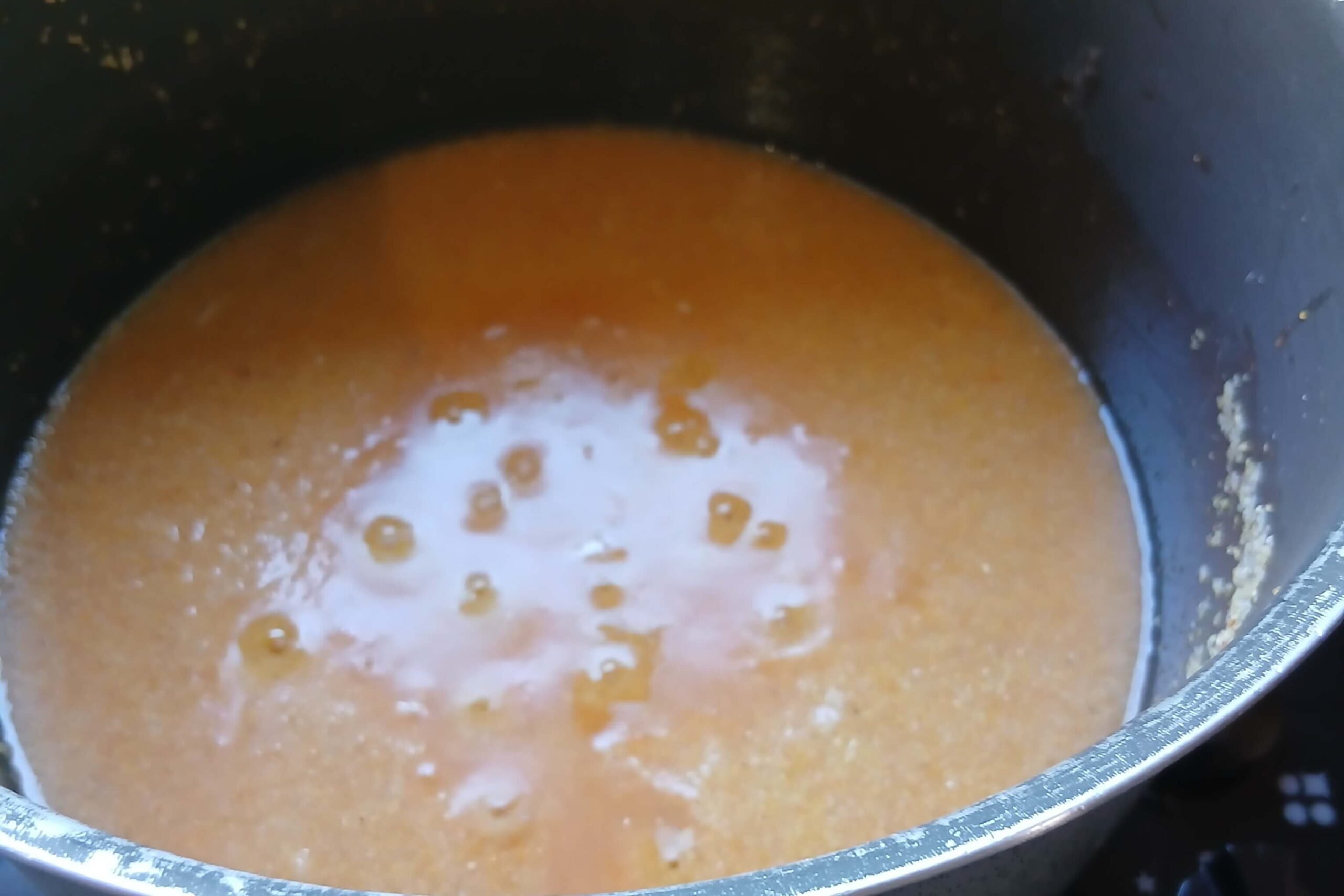
Cook the polenta over low heat for about 30 minutes, stirring constantly to keep a smooth consistency. It’s normal for a crust to form on the bottom — that’s just part of the process.
When it’s done, the polenta will pull away from the sides and bottom of the pot, becoming firmer and thicker. Remove it from the pot while still hot and transfer it to a nice serving dish.
Finally, sprinkle with freshly chopped parsley.